
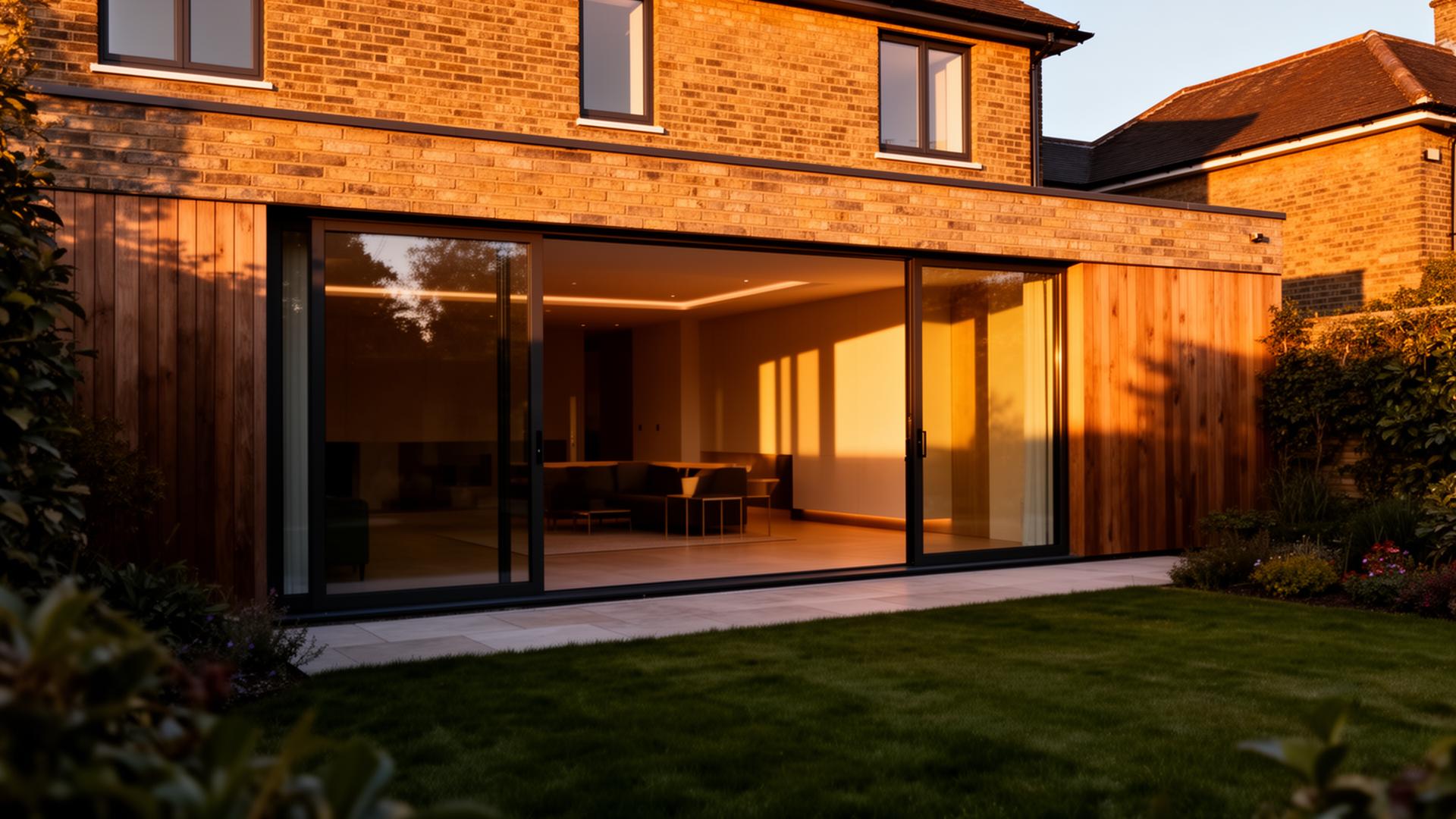




If your home is starting to feel too small or too dated, you're not alone. The right answer — renovate or extend — depends on your budget, your property type and your long-term plans. With property prices and construction costs where they are in 2026, the decision matters more than ever.
Renovating vs extending: what's the difference?
A renovation improves or upgrades the space you already have — kitchens, bathrooms, layouts and finishes. An extension physically increases the size of your home by adding new rooms or enlarging existing ones.
When renovating makes more sense
- Your layout works, but the condition is outdated
- You want to modernise kitchens or bathrooms
- You're improving energy efficiency
- You're working to a tighter budget
Indicative UK renovation budgets: light refurbishment in the region of £5,000–£20,000, and a full house renovation in the region of £40,000–£120,000 or more. These are general guide figures only, not a quotation. The main variables are the size and condition of the property, how much structural and services work is needed, the specification of kitchens, bathrooms and joinery, and access and parking constraints in London.
When an extension is the better option
- You need more space, not just better space
- Your family is growing
- You want open-plan living
- You're adding long-term value to the property
Indicative extension costs are commonly quoted at around £1,800–£3,000 per m² across the UK, with a typical 60 m² two-storey extension in the region of £108,000–£180,000 (Checkatrade cost guide, 2026). London and the South East usually sit at or above the top of these ranges. Again, treat them as indicative: the real figure depends on ground conditions and foundations, the amount of structural steel, glazing specification, roof type, drainage diversions and the level of finish.
Key factors to consider
Property value ceiling: there is little point over-investing beyond what homes in your area are worth. Space availability: not every home has room to extend, particularly in London. Planning permission: some extensions fall within permitted development, but limits and conditions apply, larger single-storey rear extensions require a prior approval application, and permitted development rights can be restricted in conservation areas or by an Article 4 direction — check the Planning Portal and your local planning authority before you commit. Budget versus return: extensions often add more space and value, while renovations can deliver quicker results depending on the project.
Can you do both?
Often the best results come from combining the two — extend to create the additional space, then renovate the existing rooms so the whole house works as one.
If you're weighing up the options, see our home extensions and home renovations service pages, or look at our wrap-around single storey extension in St Albans AL3.
To talk it through, get in touch or call 020 8441 3144.
Related services: a kitchen knock-through and open-plan extension, a loft conversion, or, for investors, HMO and development projects.